
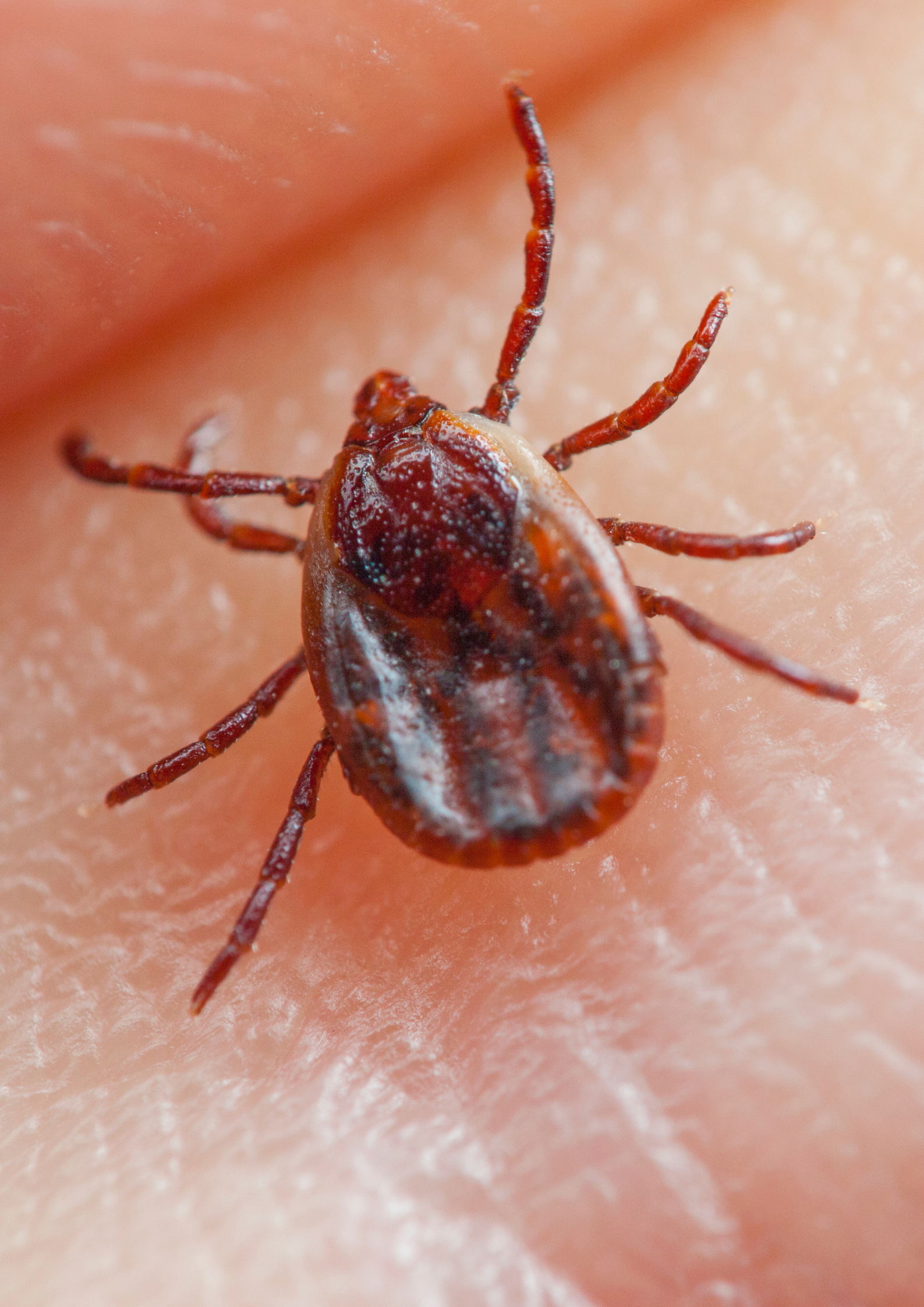
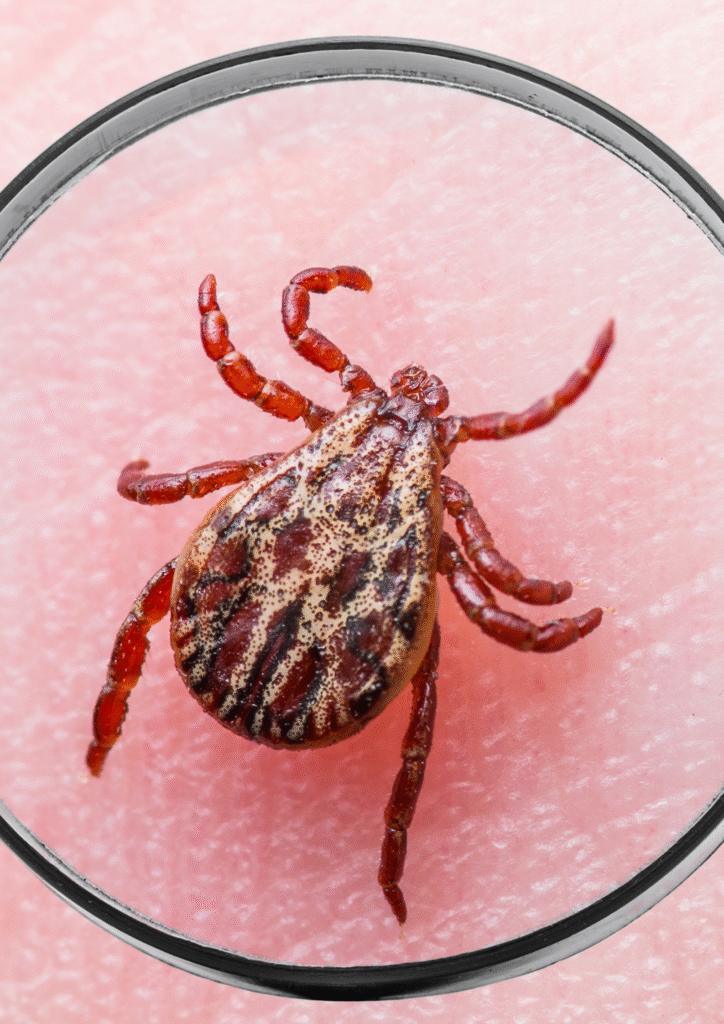
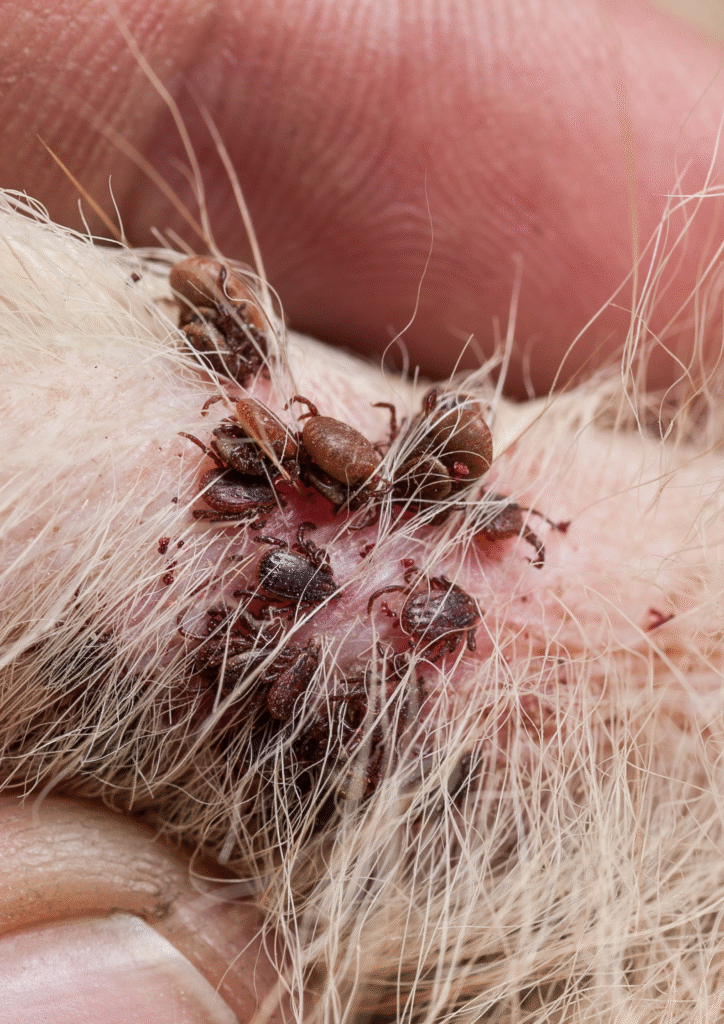
Ticks are brown-grey, egg-shaped bloodsucking parasites found on the bodies of dogs and cats. They survive on pets’ blood. They find their hosts by detecting an animal’s body odors and breath. Removal of a tick is crucial; otherwise, it can cause serious health issues for the animal’s body. Common locations they attack include the ears, head, neck, legs, toes, groin, armpits, and tail.
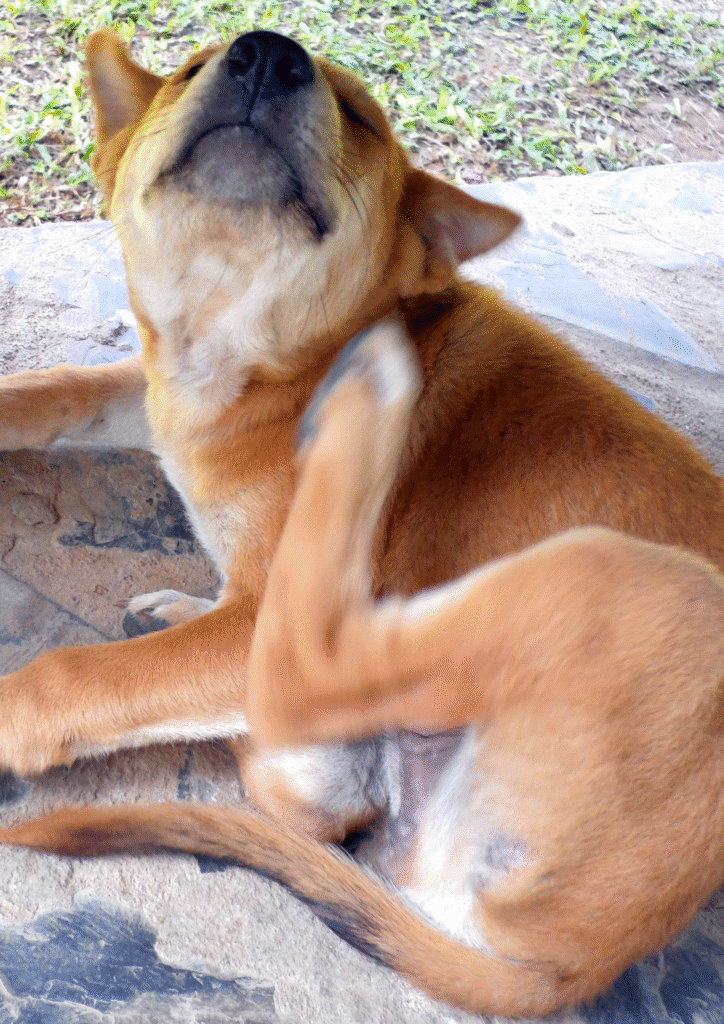
Symptoms of ticks are:
These creepy crawlies can cause a dozen problems in your pet. You cannot easily find them in your pet’s body, but there are some common symptoms to detect the presence of ticks.
- Fever
- A lot of head shaking
- Small bumps
- Redness and inflamed skin
- Lethargy
- Loss of appetite
- Unexplained scabs
- Muscle pain
- Nausea and vomiting
- Skin rash
- Tiredness
- Chills
- Headaches
- Swollen lymph nodes
Types of tick-borne illnesses occur if the removal of a tick is ignored
• Anaplasmosis: It is a tick-borne disease affecting dogs and is caused by Anaplasma bacteria. Common symptoms are severe headache, fever, chills, shaking, muscle aches, etc.
• Colorado tick fever is a type of viral infection that causes head inflammation and muscle aches.
• Ehrlichiosis: Ehrlichiosis is a tick-borne bacterial infection caused by bacteria of the family Anaplasmataceae that cause fever, headache, muscle pain, chills, etc.
• Lyme disease: It is a tick-borne illness caused by the bacterium Borrelia burgdorferi that causes fever, swelling, and pain in joints and muscles.
• Powassan virus: It is a tick-borne flavivirus found in North America.
• Rocky Mountain spotted fever. It is an infectious disease caused by the bite of a tick and is characterized by a rash.
• Relapsing fever, a type of bacterial infection that causes recurring fever and other symptoms.
• Tick paralysis: It is a type of nerve condition caused by neurotoxins in the tick’s saliva.
• Tularemia, also known as rabbit fever, is an infectious disease caused by the bacterium Francisella tularensis.
• Tick-borne encephalitis (TBE) is a viral infectious disease that involves the central nervous system.
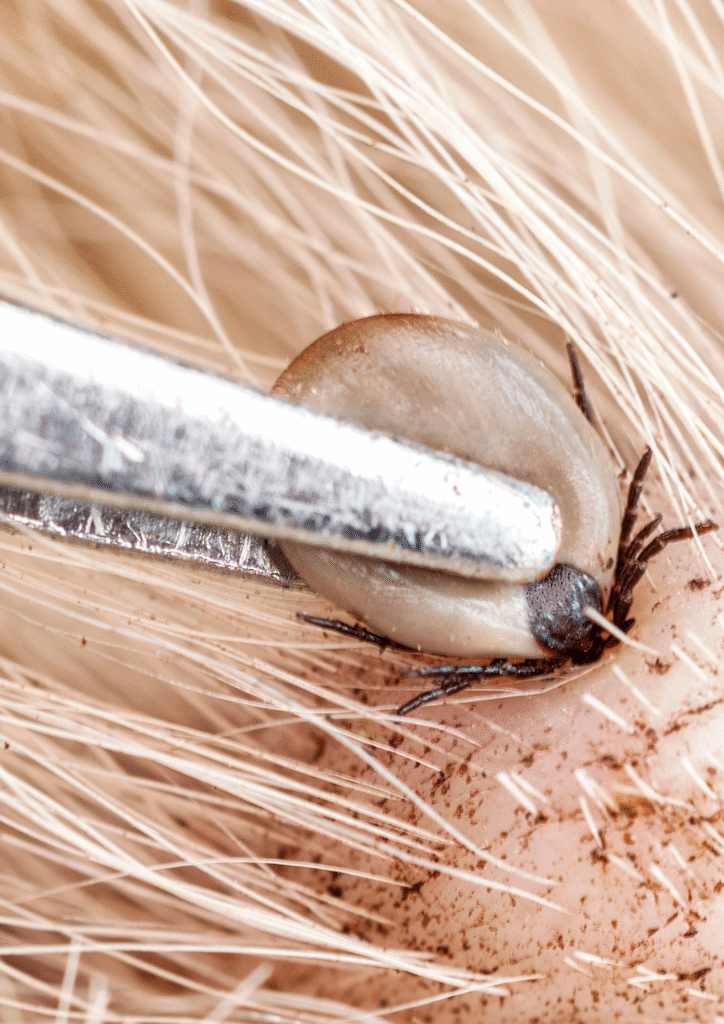
Steps for the removal of a tick
They can easily be removed by twisting them off your dog. Removal of a tick does not mean squeezing it out of your dog’s body, as there is a high risk of infections from the expelled blood entering the dog’s body.
Here are the steps involved:
1. Once you detect the tick, put on your gloves to avoid further infections and gently part your dog’s fur to easily reach the tick.
2. Slowly push the tick with the help of a tick removal device.
3. When you are confirmed that your grip over the tick is strong, twist it in a clockwise direction until the tick comes out of your dog’s skin.
4. Inspect your dog’s skin to make sure the tick is removed completely from the pet’s body.
5. Dispose of the tick by either popping it or putting it into the alcohol and finally flushing it in the toilet.
6. Wash your hands thoroughly after the whole procedure.
How can I protect my dog from ticks?
If you live in a tick-favored area, it’s best to take tick treatment that will either kill them or repel ticks quickly when they try to attach. Treatments, tablets, and collars are available everywhere in the market. Try to remove it on your own, or consult a vet if you find it difficult to do so yourself.
Tick bite treatment
Ticks are most likely to be seen in spring and autumn; they are most active at this time. If your dog is attacked by a tick bite, you can easily detect it on its skin where you see a rash, bump, redness, and swelling.
• First, check your pet if they have more ticks on the body and remove them using tick removal devices.
• Bathe with salt water, ensuring the bite is fully covered in saline water. You can also use antiseptic solutions such as chlorhexidine in the bathing water.
• Continue to bathe for 4-5 days.
• Remember to twist out the mouthpart of the tick from the bite area as it continues to suck blood if you do not remove it.
• Check for signs of infection such as redness, swelling, bumps, itching, pain, licking, etc.
• If you are not able to do this at home, then don’t worry; there are already many tick treatments available in the market. You can try them after taking the vet’s advice.
• You can’t always rely on treatments, so it’s important to check your pet’s body daily and kick the ticks out whenever they try to attach to the counter areas of your pet.
Home remedies for ticks in dogs
Removal of a tick is important as soon as you detect it. Use tick removal devices or any blunt-ended tweezers for small ticks. Larger ticks can come out with your fingers only.
1. Next to your dog’s skin, carefully pick up the tick from its body’s base.
2. Draw back gently.
3. Check that the tick, along with its mouth, has been removed.
4. Repeat the process until you encounter every tick on your dog’s body.
What not to do if your dog has ticks
For the removal of a tick, the following methods should never be tried:
• Covering with petroleum jelly or Vaseline.
• Putting nail polish into it.
• Burning the tick attached to the skin.
• Dousing with white spirit.
• Crushing
• Squeezing
These failed methods make a tick eject its body’s inside contents into your pet and indirectly increase the risk of several infections before they die.
Is my family at risk if my pet has ticks?
• No, your family is not at risk, as humans and other pets won’t catch Lyme and other diseases from a tick-infected dog.
• Yes, it is a fact that pets bring ticks into the house, but ticks rarely spread between humans and dogs.
• Other pets and humans are also at risk of tick bites if they go in places of high tick population, large green grasses, and places where livestock graze and deer are common.
Final words
Don’t think you removed all the ticks from your fingers. Ticks are of various sizes, and it’s not always possible to remove them manually. Removal of a tick is crucial, and for that, you need to use all the methods given in the article along with your vet’s advice. To minimize the risk of infections, use proper tools and techniques and avoid improper methods. Our goal is to remove the entire tick population from the dog’s body, including the mouthparts, because the longer the ticks are attached, the higher the chances of transmission of several tick-borne diseases. Practice good aftercare, and dispose of the ticks safely; this way, your dog will never catch the tick attack.