
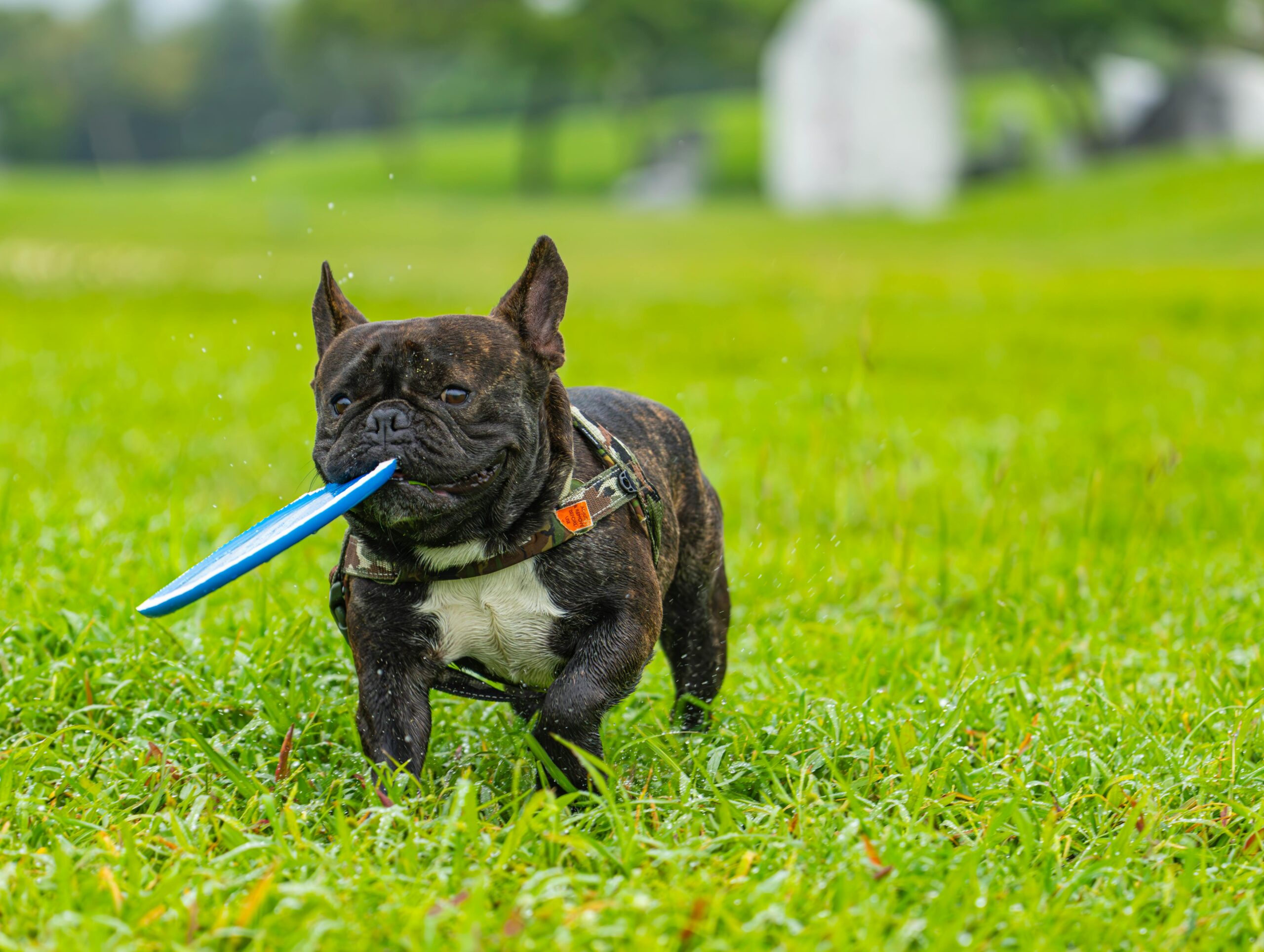
Fetching is second nature for dogs. Especially breeds like Labradors and retrievers, born to play fetch. For them, chasing after a toy or a ball and bringing it back is pure fun. In the case of puppies, they love to chase the ball but never bring it back because that activity is completely new to them. The movement of the ball amuses them. Fetching is a skill, and the good news is it can be taught! If you are wondering how to teach a puppy to play fetch, the answer lies in practice, patience, and a clear approach to the art of retrieving.
The process appears simple, but it has two behaviors: chasing after the toy and bringing it back. The first part seems fun to puppies, but the actual skill lies in the second part, where the puppy returns the toy to you.
In this article, we will explore the step-by-step fetch training guide and how you can make this game exciting for both you and your little furry friend.
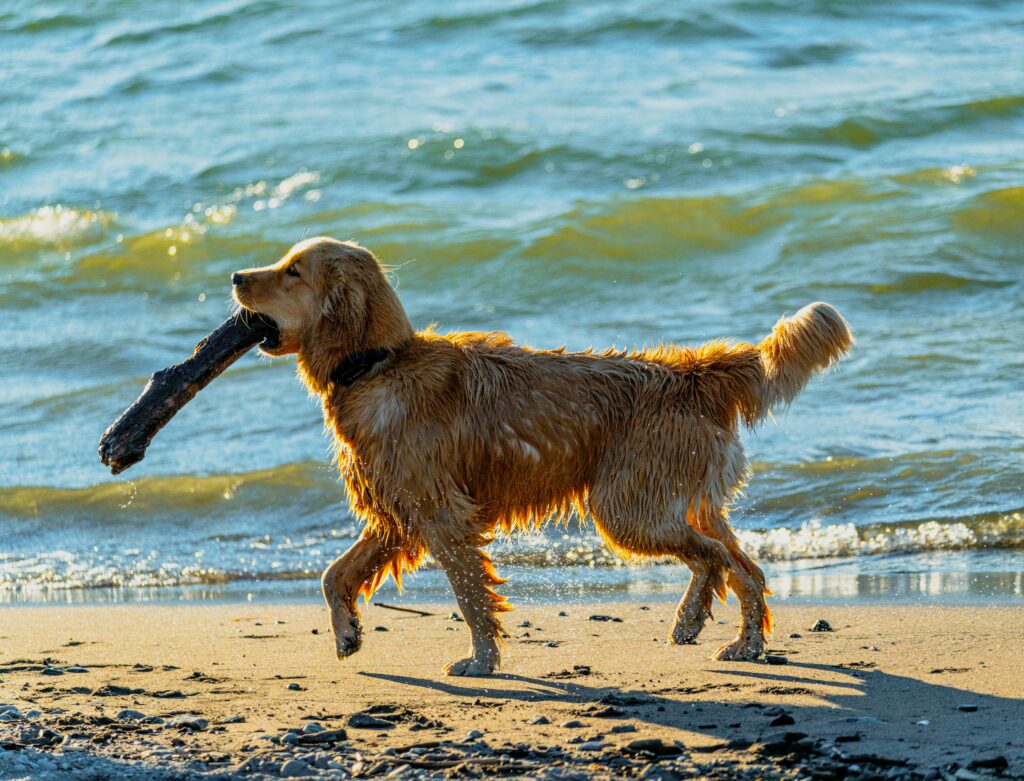
What will you need?
- An embedded, small space.
- A toy or a ball
- Training treats for puppies.
- 10-15 minutes of everyday practice.
- Patience and enthusiasm.
How to teach a puppy to play fetch: A five-step guide
Step 1: Start in an embedded tiny space.
When you are teaching your dog to fetch, start in a small embedded space like a fenced yard, hallway, balcony, or even a small room. The reason behind choosing these areas is that your pup has no chance of distraction during the practice. He focused on you and the game and will not run off with the toy, instead bringing it back to you.
Step 2: Encourage your dog to go after the ball.
In this step, toss a toy or a ball just a short distance and encourage your pup to go after it. Most dogs love to chase the things that are thrown, so your work is just to get the toy moving. One thing to keep in mind is to always keep the toy visible and close enough for your pup to grab. They may lose interest if it’s too far or out of sight. Take a minute to introduce your toy or a ball if your puppy has no idea what to do with it. Rolling it on the floor, bouncing it, or playing with it yourself will make your pup excited about the fetching object.
Step 3: Train your pup to retrieve the ball.
Once your pup is good at chasing the ball, the next step is to teach them the harder part, which is bringing the ball back to you. Here we break down the fetch command into four small parts:
1. Toss
Throw the toy or a ball from a small distance, like on a balcony, or across the room from a few feet away.
2. Recall your dog
Use a happy, encouraging voice, and repeat the same word, like “come” or “bring it.” It will help your pup to connect the word to the action.
3. Reward
When your dog comes back with the ball, celebrate! Give them rubs, praise, and small treats to show them they did the right thing.
4. Rehearse
Practice is the key! The more times you rehearse with your pup, the faster they will learn that returning the fetching object means more fun and rewards.
Step 4: Train your dog to obey the “drop it” cue.
When your dog comes with the ball, place your hand under their mouth with your palm facing up and say gently, “Drop it.” Don’t worry if they don’t get it. It’s completely normal. Repeat the cue until they let go and immediately praise them with a treat. Avoid tugging and pulling, as that can turn into a game of keep-away. With time and steady practice, they will learn what “drop it” means.
Step 5: Pitch the ball one more time.
For your pup, the fun is not only about chasing and bringing the ball back. They expect you will throw it again. Try to set aside at least five to ten minutes of steady play so your dog learns that returning the ball means the game keeps going. With days passing, the fetching skill becomes concrete for your pup.
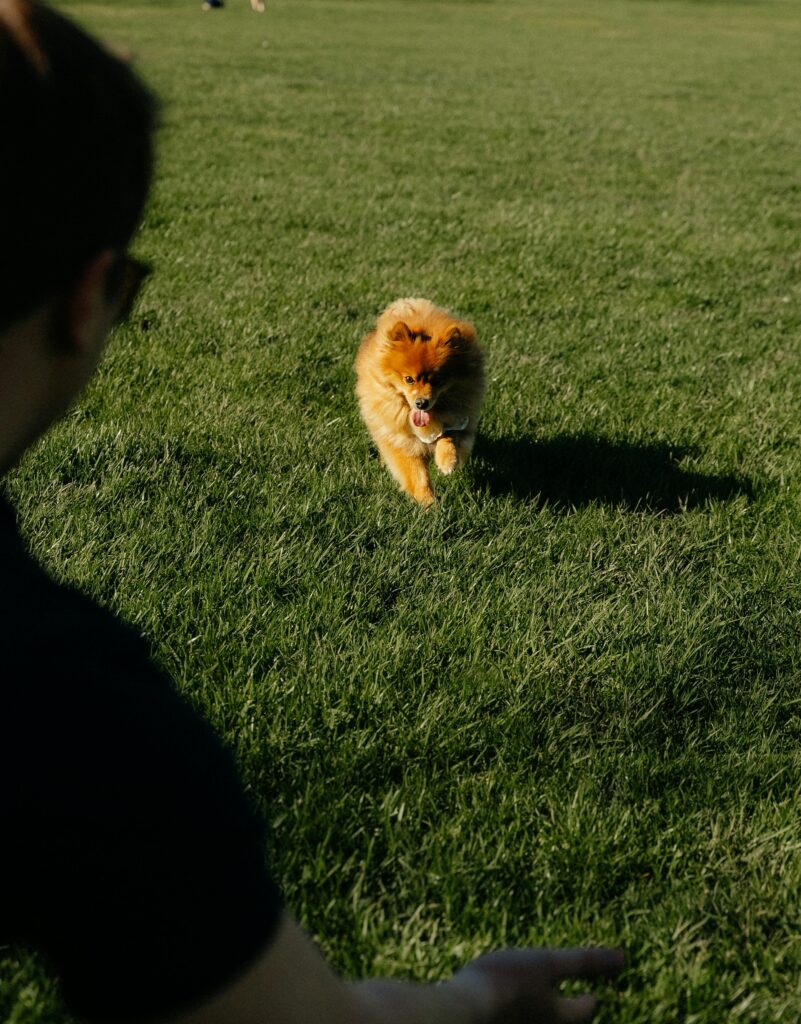
Things to avoid while teaching a puppy how to fetch
When figuring out how to teach a puppy to play fetch. It’s the patience of the trainer that requires the most. To make the process enjoyable and safe, here are a few common mistakes to avoid:
1. Don’t push.
Not every dog has the same stamina for long fetch sessions, so don’t push your pup and always pay attention to their comfort and limits.
2. Don’t scold.
Puppies are like humans; they learn best through encouragement, not punishment. Don’t scold them; instead, reward their behavior with treats and praise. Setting up a behavior takes time; if you are frustrated, then it’s time to pause and try again later.
3. Don’t play in unsafe areas.
Safety comes first. Avoid places with people, extreme weather conditions, and rough terrain. Stick to a small, secure area where your pup can run freely without any risk.
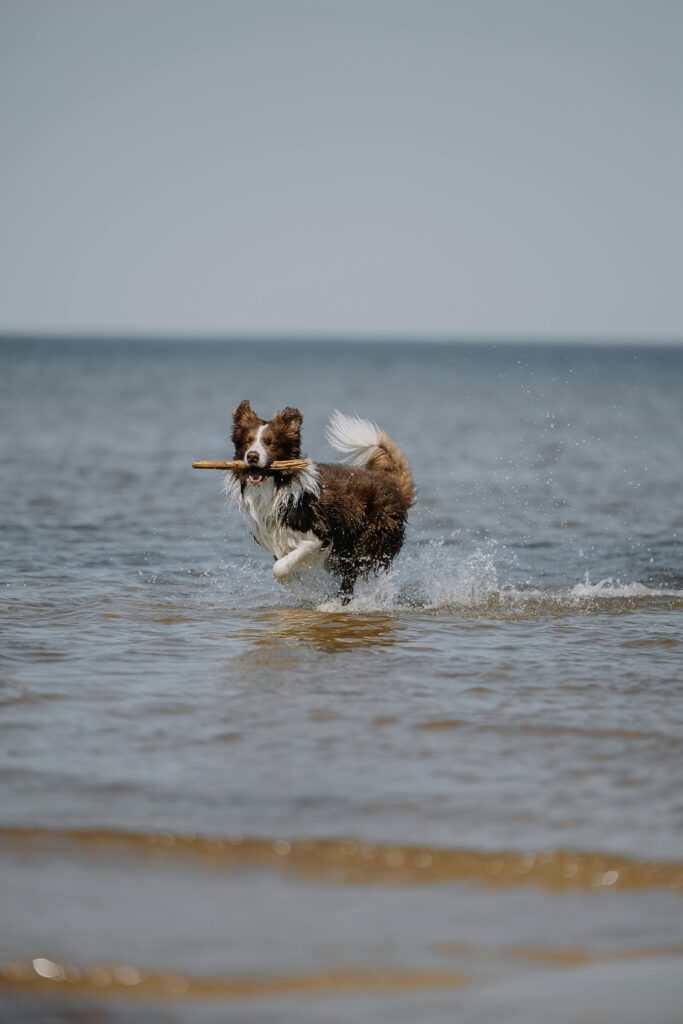
Finding the ideal toy
When learning how to teach a puppy to play fetch, the toy you choose makes a big difference. Think about your dog’s age, size, and comfort level. Puppies and older dogs often do better with something soft and easy to grip, while dogs who are fetch pros might enjoy toys that are a bit more challenging. The right toy keeps the game fun and safe for your pup.
Some great fetch toy options are:
• Squeaky tennis balls or squeaky footballs
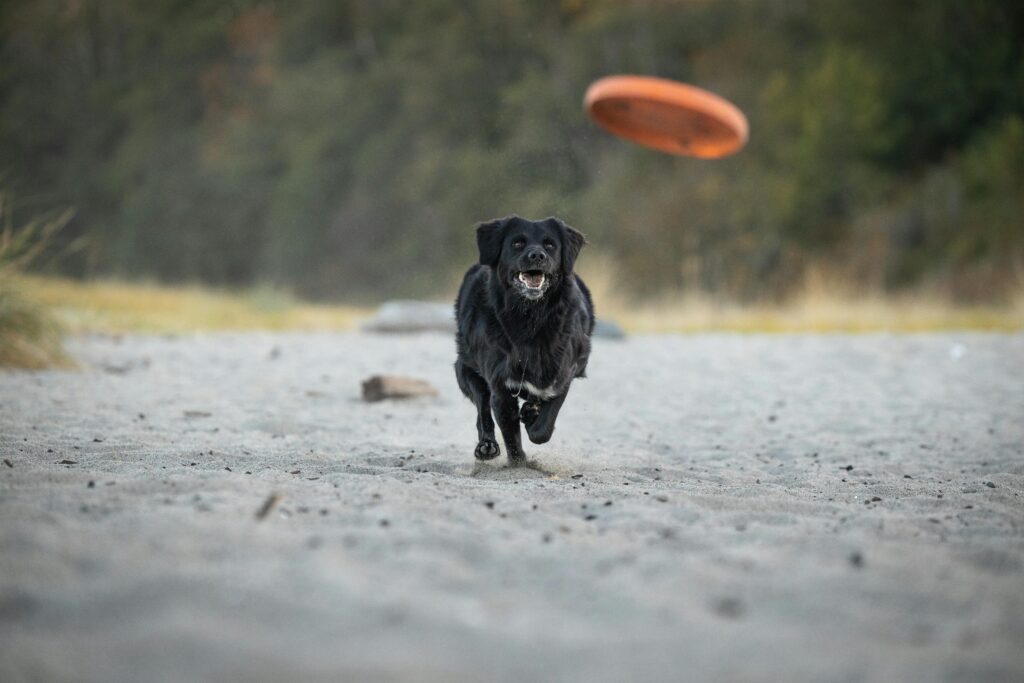
• Soft rubber discs or flyers. Especially gentle ones for sensitive mouths or those that stay flexible in colder weather.
• Rope toys with rubber ends.
• Plush toy for light and gentle play.
• Plastic or rubber bumpers.
What if your puppy is not interested?
Sometimes, when you are figuring out how to teach a puppy to play fetch, you might notice your little one is not at all interested in the fetching idea. This is totally normal!
Here are a few simple ways to spark their interest:
• Start with fun games like tug-of-war to make the toy exciting for your pup.
• Tease or wiggle the toy around them. It will grab your puppy’s attention.
• Use a toy that can hold treats to make it extra rewarding.
From these simple steps, you will be able to ignite the interest of fetching in your pup.
Final words
Learning how to teach a puppy to play fetch requires consistency and patience. Start small, using toys that your dog likes the most. Pitch the toy from a shorter distance and gradually increase the gap. Remember, by rewarding every little success, you will turn playtime into a positive learning experience. Fetching is actually not just a game; it’s a great way to bond, provide exercise, and build good training habits. With a little encouragement and following the five steps given in this article, your puppy will soon start chasing, retrieving, loving every throw, and enjoying the activity.