
Introduction
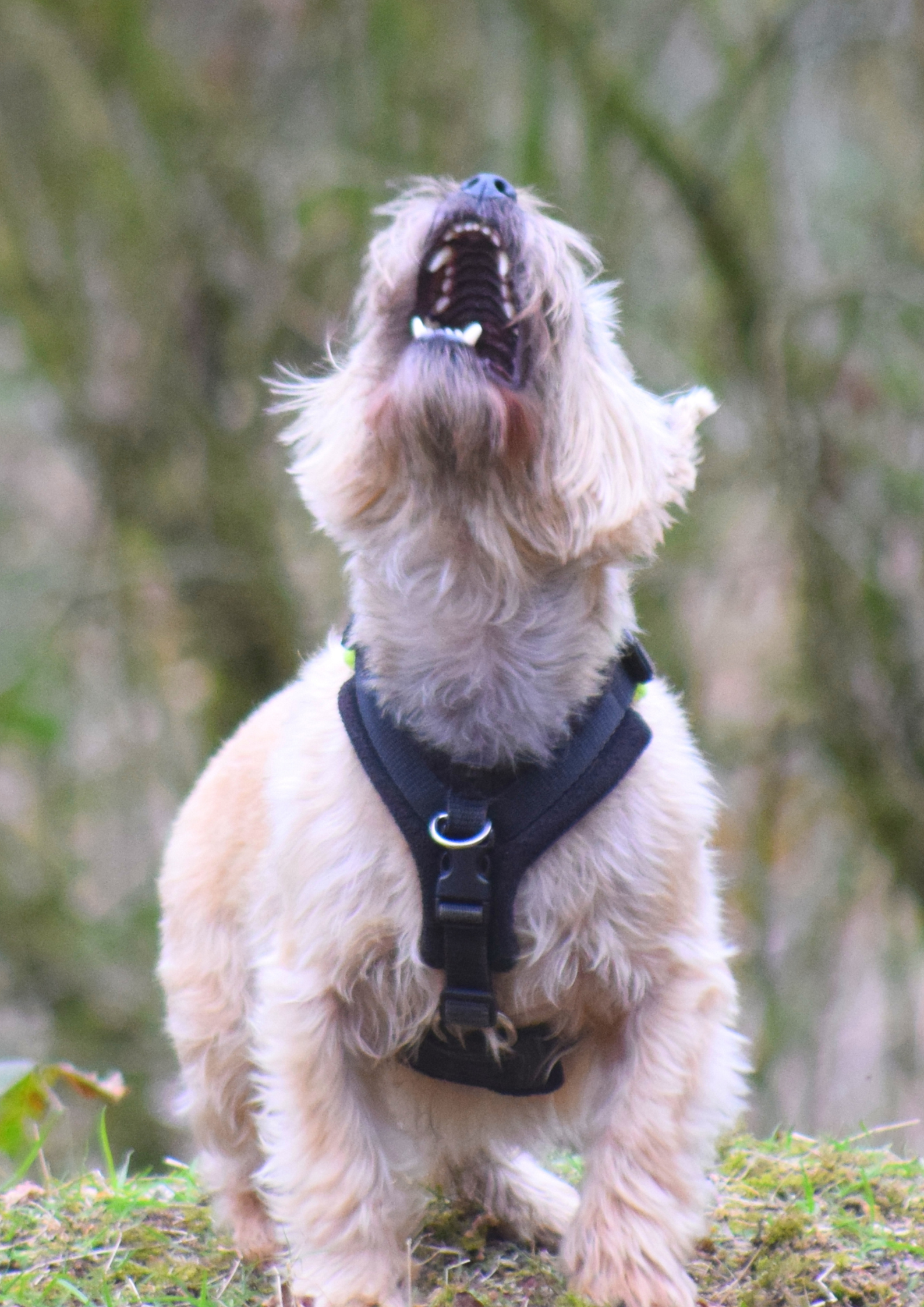
Barking is common. All dogs bark! But what if a loud dog barking won’t stop? You may be curious why your dog is barking with high intensity. Barking is never unnecessary! If your dog barks a lot, there must be a reason behind it, and it’s up to you to investigate the matter. In this article, we will unfold the root causes behind loud dog barks and how effortlessly we can fix them.

Reasons for loud dog barking
If loud dog barking is excessive, here are the reasons for the behavior.
1. They are alarmed
Does your dog bark when any noisy vehicle passes by, or do they surely bark when the doorbell rings? This is an alarm barking and is very easy to stop. Here, the game is all about diverting your dog’s attention as soon as possible by giving them treats (chewing eliminates barking) or by taking them outside the house. This training is one of those things you can do yourself.
2. They are excited
You may notice an excited bark from your dog during walks, when they are outside the house, or when they see any dog passing by. It is their way to say hi! To their colony friends. Dogs naturally bark even when they do something they love, which could be of both low and high intensities.
3. They are anxious
Anxious barking is similar to alarm barking, but the meanings can be different. Loud dog barking usually occurs when you are leaving your house for a longer period. This can be seen in regular walks also. Your dog may bark intensely at the stranger or other dog who is approaching him. This is not because of aggression; they start barking at them because they are anxious and scared. There could be other reasons behind anxious barking, like some dogs have separation anxiety, due to which they bark a lot whenever their owner leaves them at home, even for shorter durations.
4. They want something
This is also known as demand barking, and it usually occurs when your dog wants something, like if he wants to go for a walk, he has to pee, or even if he needs to be pet or wants his favorite toy. Demand barking is generally specific and shorter.
Short and paused barking following you—your dog may be looking at the thing he wants with innocence, and then looking at you with the hope of getting his desire fulfilled. Here, you should ignore these kinds of barks because they will convert into reinforcement behavior and encourage them to demand barking in the future.
5. Territorial barking
Territorial barking is loud dog barking at people, dogs, or other animals who are approaching their territory in any way, like standing there, talking to another person, and so on. This just signifies their fear of losing their territorial area to other dogs or animals.
6. Attention-seeking barking
This is something you can see in human children also; they unnecessarily cry louder to draw others’ attention to them. Similarly, dogs do the same by barking for no specific reason.
7. Compulsive barking
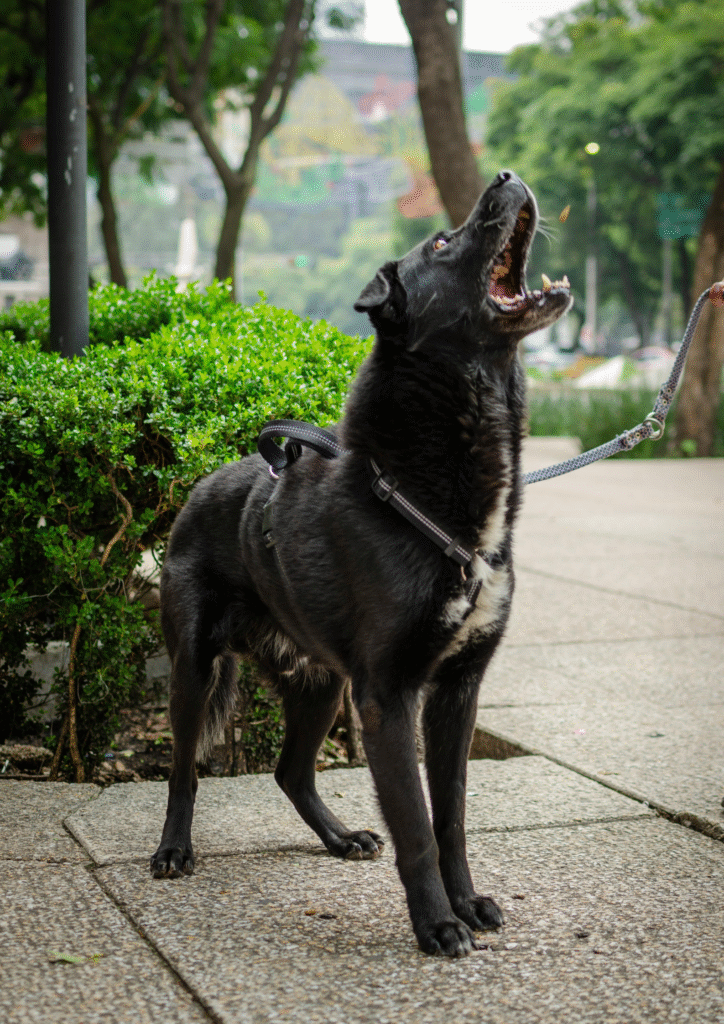
This is a behavioral issue where the dog’s barking is never-ending. They even move repeatedly while barking. But you can seamlessly overcome compulsive barking by using positive reinforcement techniques at home or through professional help.
8. Frustration-induced barking
Dogs’ reactions are similar to humans’ when they are frustrated. Humans scream and dogs bark in frustrating situations. Here, dogs bark for conditions like when they can’t access their favorite playful things or their movement is restricted if they are tied up.
9. Socially facilitated barking
One of the reasons behind loud dog barking is that some dogs bark hearing other dogs barking. They bark even from a distance, such as the dog upstairs, which starts barking when it hears loud social barking from the front road.
10. Illness and injury
Dogs also bark a lot in physical pain or when they are ill. So, before trying to solve your dog’s barking problem. Please get your dog to the veterinarian to rule out medical causes.
11. Insecurities
Dogs bark a lot when you give attention to other dogs or animals, or when you adopt another pet. They vent out their feelings of ignorance with loud barks. They even compulsively cry in these kinds of situations.
12. Greeting barking
Barkings are not always negative. Dogs even bark when they greet other people or dogs. They feel relaxed and even wag their tail in the process.
How to stop loud dog barking?
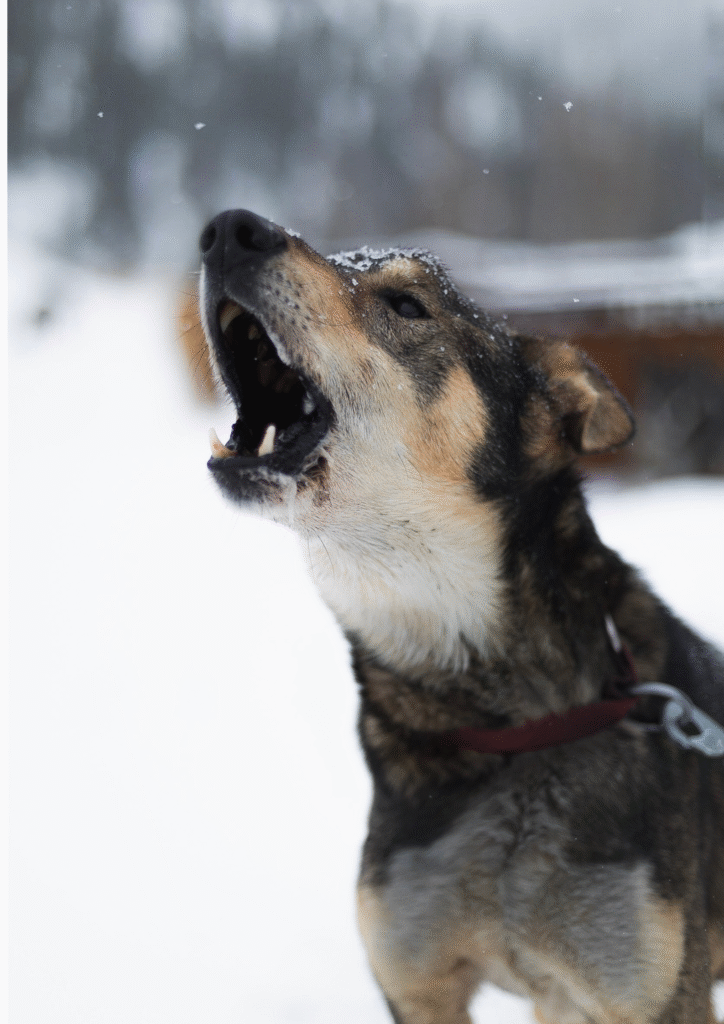
To stop loud dog barking, there are many approaches, such as
1. Train your dog to bark a little
This is actually a good approach to alarm barking. Mark with the clicker and feed the treat when they complete their few barks. This encourages them to bark less in alarming situations. Repeat the process 10-20 times until they learn to bark fewer times.
2. Replacement behavior
This works best for territorial barking and demand barking. It works by replacing the dog’s negative behavior with engaging them in something else, like running to the crate or lying down. Once they do the task, offer them the things they want.
3. Quiet training
To reduce loud dog barking, quiet training is the best approach. This works by teaching your dog to be quiet after fewer barks at the sight of someone passing by your property or coming to your door. Your dog will stop barking by your clear and calm command, “Quiet.” If it doesn’t work, you just need to hold their muzzle loosely and then repeat the same command calmly, and if they do so, offer their favorite treats to them and repeat the process in a short loop.
Note: Don’t touch their muzzle if they are not comfortable.
4. Go to your spot training
It helps your dog to calm down when people come to your home. You need to first teach your dog to stay at the front door, then calmly give the “go to your spot” command. Make sure your dog receives treats for pursuing this behavior. It encourages them to continue this similar action in the future, and this way your dog will also learn that people coming to your home is not a bad thing, and with consistent practice, he will learn not to react in such situations.
5. Try crystal clear body language
This technique works well in attention-seeking barking. Once you figure out that your dog’s bark has no purpose, try to make crystal clear body language by sending a message to your dog that his attention-seeking behavior will fail. For example, if your dog barks to gain your attention, either ignore him or look on the opposite side, such as at a ceiling fan, or lastly, simply walk out of the room. This will discourage their behavior in fewer repetitions.

Final words
Yes, loud dog barking irritates a lot, but it is important to understand that each bark has its purpose. By following the techniques given in this article, you will notice your dog will do things that don’t include excessive barking, and this can be managed with correct, consistent, and repetitive training without any punishments or scolds.
Note: Dog Clickers and humane Anti-Bark collars are effective tools for stopping persistent loud barks, especially when you are outside the house with your dog.